The stock market is one of the most misunderstood concepts in personal finance.
It’s talked about constantly on the news, on social media, in WhatsApp groups yet most people feel oddly disconnected from it. Like it’s something abstract. Something “other people” participate in.
And when you don’t really understand something, it’s very hard to trust it.
That’s exactly why so many people feel anxious about investing, suspicious of markets, or convinced they’re “too late” to benefit.
So let’s strip this back to basics.
The Wrong Way to Think About the Stock Market
A lot of people think of the stock market as a line on a screen.
You buy something. You hope it goes up. You don’t really know why it should — just that it might. When it doesn’t behave the way you expect, frustration creeps in.
Others see the market as a casino, a rigged game where insiders win and ordinary investors lose. Given some of the headlines over the years, that cynicism is understandable.
But here’s the problem with both mindsets:
If you see the market as abstract or rigged, you’ll either stay out altogether or panic the moment volatility shows up.
Neither leads to long-term success.
A Better Way to Look at It
Here’s a simple shift that changes everything:
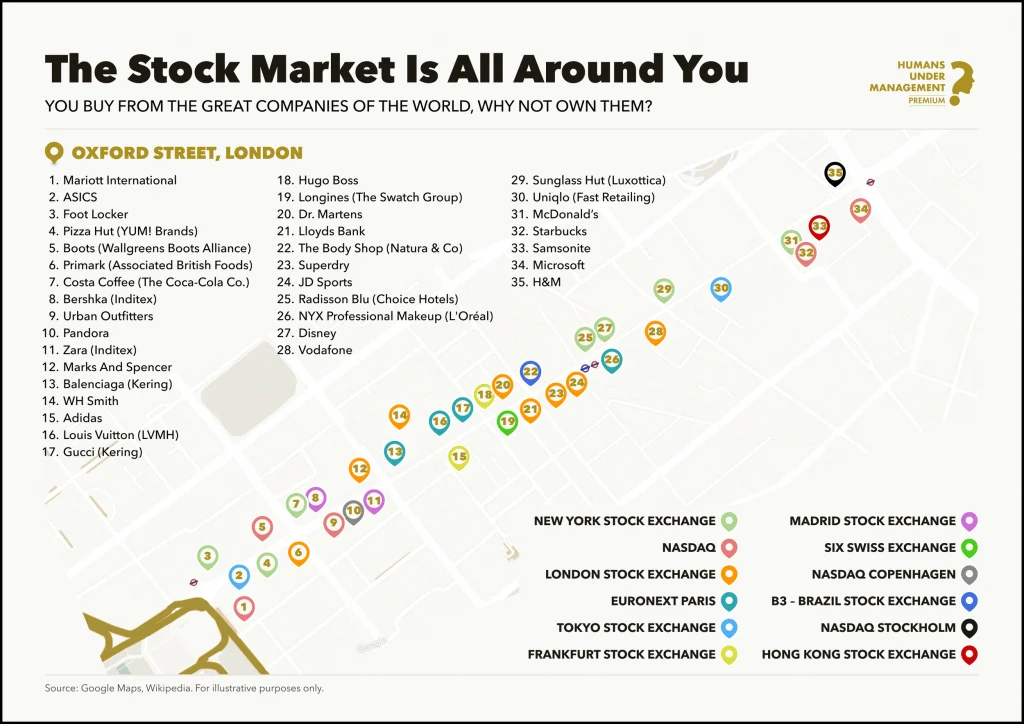
The stock market isn’t a thing. It’s a collection of companies.
And you interact with them every single day.
From the moment you wake up:
- You use your phone
- You buy coffee
- You drive your car
- You shop on the high street
- You stream TV
- You pay for insurance, energy, and banking services
Many of those businesses are publicly listed companies.
When you invest usually through pension funds or investment funds you become a part-owner of those companies.
Not a trader.
Not a speculator.
An owner.
What Actually Drives Returns
These companies:
- Sell real products
- Provide real services
- Generate real profits
Their management teams are incentivised to grow earnings over time. Those profits are either reinvested into the business or paid out to shareholders.
And here’s the part most people miss:
When you spend money with these businesses, you’re contributing to their revenues and indirectly to your own returns if you’re invested.
You are not betting on the stock market.
You are participating in it.
Why the Headlines Get It So Wrong
Financial media thrives on drama:
- “Markets plunge”
- “Billions wiped off”
- “Worst day since…”
But those headlines focus on short-term price movements, not long-term value creation.
The quoted market value you see in the news is simply today’s best estimate of the future value of all those companies as judged by millions of participants.
It changes daily.
The businesses themselves usually don’t.
Long-Term Success Is Boring (and That’s the Point)
Successful investing has very little to do with clever timing or hot tips.
It comes down to:
- Understanding what you own
- Staying invested
- Behaving well when things feel uncomfortable
Most investing mistakes aren’t technical they’re emotional.
People sell because they’re scared.
They chase performance because of FOMO.
They abandon good plans during bad headlines.
Ironically, the investors who understand the market best often do less, not more.
You Are the Stock Market
This is the mindset shift I try to instil in clients:
You are not separate from the market.
You are the market.
You contribute to it.
You benefit from it.
You own slices of the world’s most productive companies.
And over long periods, those companies tend to grow because earnings grow, dividends are paid, and innovation continues despite recessions, crises, and headlines along the way.
My Take
If you view investing as ownership rather than speculation, everything changes:
- Volatility becomes noise, not danger
- Downturns become temporary, not permanent
- Discipline becomes easier to maintain
Understanding this is one of the most important steps on the journey to financial independence.
The Bottom Line
The stock market isn’t something to fear or outsmart.
It’s already part of your life.
And with a clear plan, the right structure, and the ability to stay the course, it can quietly do what it has always done: Reward Patience.
👉 If you’re unsure whether your current investments actually reflect this long-term ownership mindset, let’s talk. A proper financial plan removes guesswork and replaces it with clarity.