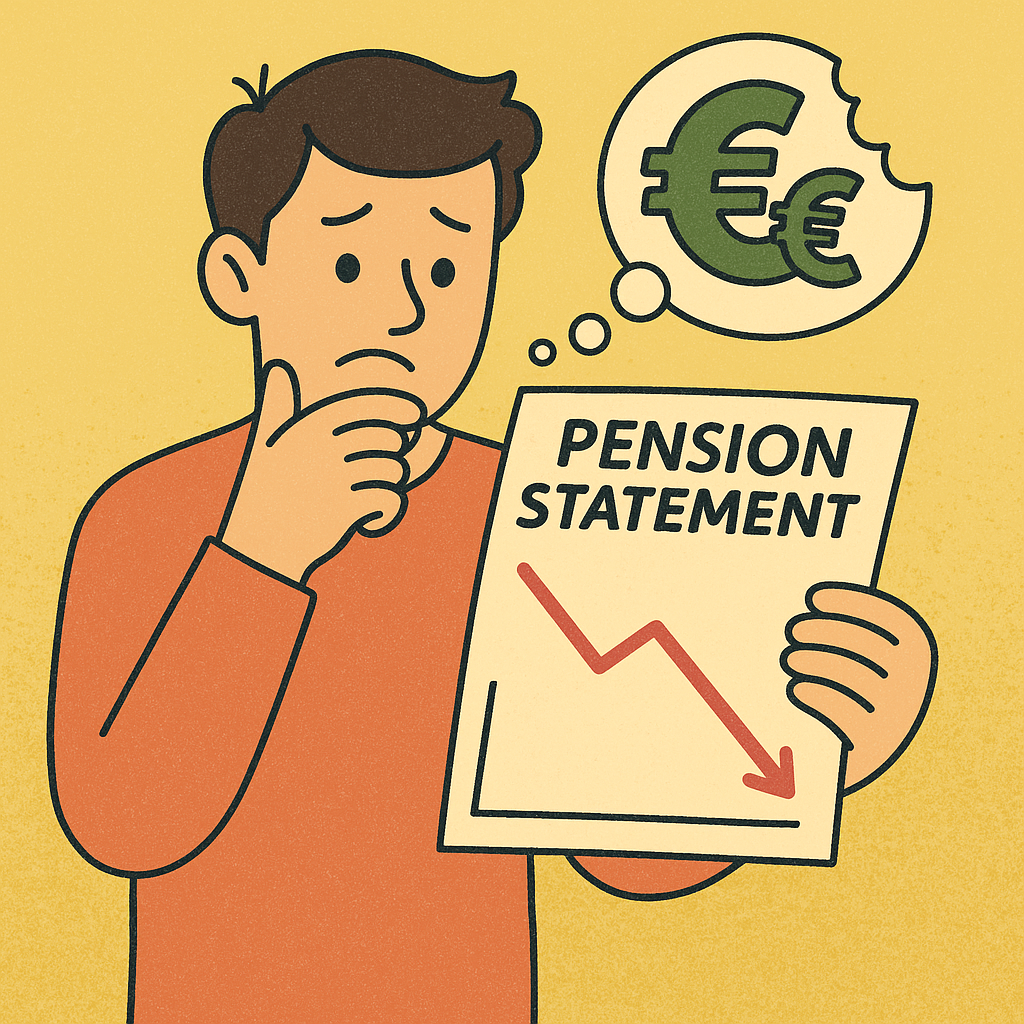
This week I reviewed a pension that had been taken out in 2021.
The client had paid in over €12,000 since starting the plan.
The current value? Just over €9,000.
And no the markets weren’t to blame. In fact, they’ve performed well over the last two years.
The issue was the structure and fees. Between the policy fee and bid–offer spread alone, the total drag was close to 12% per year. They never stood a chance.
Unfortunately, this isn’t rare. Many people are unknowingly paying outdated or excessive charges that quietly eat away at their pension every single month.
So how can you tell if your pension is quietly eating itself?
1️⃣ The Policy Fee Trap
If your statement shows a “Policy Fee” often between €5 and €15 per month it may look small, but it adds up quickly.
On a €150 monthly contribution, a €12 policy fee means nearly 8% of your payment disappears before a cent is invested.
Modern PRSAs or personal pensions often have no policy fee at all.
2️⃣ Bid–Offer Spread / Allocation Rate
Look for phrases like:
“Allocation rate: 95%”
“Bid–offer spread: 5%”
That means €5 of every €100 you contribute never even makes it into your fund.
It’s a relic from older commission-based pension products and it adds zero value to you.
Most modern contracts have moved away from this practice, but not all of them.
Believe it or not, there’s still a provider out there notorious for keeping these outdated structures alive.
Let’s just say… if squirrels were looking for a pension company to invest with, they’d probably feel right at home. 🐿️
3️⃣ Annual Management Charges (AMC)
Your AMC covers the cost of running your fund.
For most modern pensions, this typically ranges between 1% and 1.5% per year, unless you’re paying in very large premiums that qualify for discounted rates.
Anything above that or layered with additional “platform” or “fund management” charges deserves a closer look.
Even small differences compound massively over time. A 1.5% vs 1.0% annual charge might not sound huge, but over 25 years on a €200,000 fund it could cost you more than €40,000 in lost growth.
4️⃣ Performance vs Market Reality
If you’ve been contributing regularly and your fund hasn’t grown especially since early 2023 it’s time to dig deeper.
Don’t just assume the markets are to blame.
It could be that your pension provider or product structure is quietly holding you back.
Why This Matters
You work too hard for your money to see it eaten away by unnecessary costs.
And while a few euro here and there might not seem like much, over years and decades those charges can wipe tens of thousands off your eventual retirement fund.
The good news?
You’re not locked in.
Older or high-fee pensions can often be transferred to modern, low-cost options without penalty improving both growth and transparency.
My Take
When I see a pension that’s underperforming despite healthy markets, 9 times out of 10 the culprit isn’t the investment it’s the charges.
Reviewing your pension isn’t about switching for the sake of it. It’s about making sure your money is working as hard for you as you worked to earn it.
The Bottom Line
If you’re unsure what you’re actually paying, send me your latest pension statement or policy summary.
I’ll break it down for you in plain English and show whether your current plan is still fit for purpose or quietly eating itself away.
📌 The earlier you catch it, the more you keep.